Our Most‑Prescribed Exercises This Week — And Why We Love Them
Every week in the clinic, certain exercises rise to the top because they’re exactly what our dancers need most. Whether you’re working toward pre‑pointe, improving your rises, or building better foot control, these four favourites have been absolute standouts.
Let’s break down what they are and why they’re so effective.
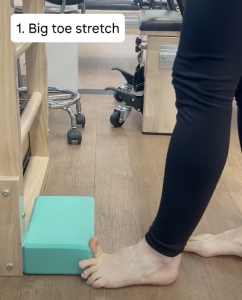 1. Big Toe Stretch — For Higher, Stronger Rises
Your big toe plays a huge role in the height and quality of your rises. When it’s stiff, your rise height is limited; when it’s mobile and strong, everything improves.
This stretch helps:
- Improve rise height
- Reduce gripping through the smaller toes
- Support cleaner push‑offs and landings
A tiny joint with a big impact.
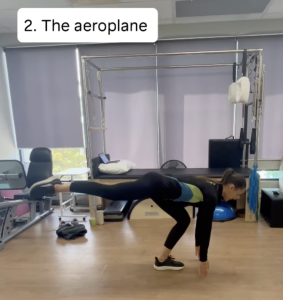 2. The Aeroplane Exercise — A Pre‑Pointe Essential
If you’re preparing for pointe work, this one is non‑negotiable. The aeroplane exercise builds the stability and coordination needed to safely support your body en pointe.
It targets:
- Balance
- Core control
- Pelvic alignment
- Single‑leg strength
It’s one of our go‑to tests and one of our favourite training tools.
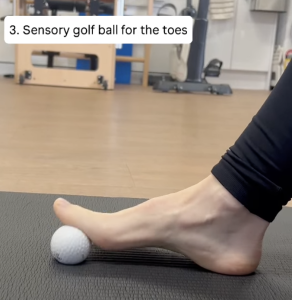 3. Sensory Golf Ball Under the Toes — For Better Toe Control
This simple tool creates huge improvements in foot awareness. Rolling or pressing the toes over a sensory golf ball wakes up the intrinsic foot muscles and improves proprioception.
Benefits include:
- Better toe articulation
- Improved balance
- Cleaner footwork in rises and relevés
It’s small, cheap, and incredibly effective.
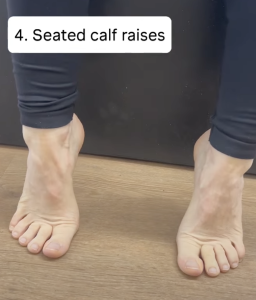 4. Seated Rises in Parallel — Technique Meets Awareness
Seated rises remove the temptation to cheat with turnout or momentum. They force you to isolate the foot and ankle, helping you understand what should be working.
These help with:
- Strengthening the foot and ankle
- Improving rise mechanics
- Building awareness of toe pressure and alignment
A deceptively simple exercise that delivers big results.
Which One Will You Try First
Whether you’re working toward pointe, improving your technique, or just wanting stronger, happier feet, these exercises are a great place to start. Each one targets a different piece of the puzzle — and together, they build the foundation every dancer needs.



